There was a heavy roar outside L’Abbaye de Mondaye, in Lower Normandy. The steamy summer rains were upon us, soaking the bushy hydrangeas in the courtyard. In the church, the monks in girdled white robes were burning incense and praying for love and friendship.
It’s easy to be friendly and loving in Normandy. This special version of northern France welcomes you earnestly, scented by the dry smell of sun-splattered corn fields and the bittersweet flavor of the rosy geraniums hanging heavily on all window sills. Bursts of green unfold across the hills that drown into the English (or for that matter… French) Channel at Arromanches or the D-Day Omaha Beach. No minimalist cooking or drinking. Pungent bubbling apple cider and dusty bottles of wine untie your tongue during your first 4-course feast there.
A voiturettechortles uphill to a castle nestled behind a curtain of white birch trees. The car has only two seats, a huge trunk (with enough room for the potato sacks the locals traditionally carry home to cook these delicious patates au beurre), a shift stick for reverse, and two pedals. Renting a voiturette from a local keeps your budget low and your pride high: €150/week, 5 l/100 km, plus low-level CO2 emissions.
The brave miniature stopped with a screech in front of the castle. ‘Soyez bien venue, madame. Welcome. Jollie microcar!’ This car made me friends with all the chamberlains in Normandy. A special caste: fine historians, delightful hosts, and gifted tour guides. I took the advice of Mr. Barbey, the chamberlain of Crèvecœur, and followed the trails of the most charming medieval castles in Calvados on my big-Norman-conquest-on-a-medium-budget trip. From the supposedly haunted Calvados Castle, an impressive 11th-century fortress, to the museums and gardens of the typical countryside Vendeuvre, I finished many of my tours with a brunch or an early dinner in a French chamberlain’s family. The mules frites (fried mussels) and puffed pastries came with stories in my butchered French and in their trilled English on the side.
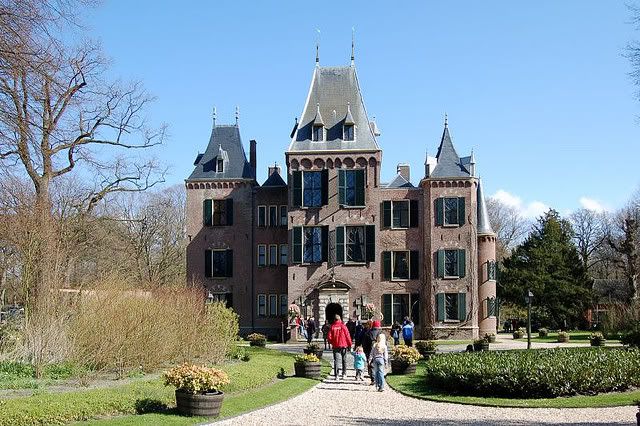
The castles in Lower Normandy are all listed monuments, some small and homey, others majestic, with all kinds of period add-ons. Le Château de Caen hosts Le Musée des Beaux Arts and Le Musée de Normandie; Balleroy, between Saint-Lô and Bayeux, boasts an impressive hot-air balloon museum, while the Castle of Falaise tells you how William the Conqueror changed the face of the Western world. The €5-€10 admission includes guided castle tours.
Courteously old-fashion yet welcoming and stylish accommodation is available in almost all Norman villages: self-catering gîtes (Cottage in Besneville, Manche, €350/4 people/week), manors (Manoir du Chene, in Nonant, €75/double room/night), high-end equipped castles (Château de Sully, Port en Bessin, €170/double room/night), historic hotels (Hôtel de Normandie, Arromanches-les-Bains, €70/double room/night), or monasteries (L’Abbaye Saint Martin de Mondaye, €45/double room/night).
I didn’t conquer it all. But the Bayeux tapestry, the home-made apple cider, and the cheerful flower pots in every courtyard still conjure the unique spirit of Normandy. Ever since, hydrangea scent has never faded.
[caption id="attachment_589" align="aligncenter" width="300" caption="On the National Day of France"]

[/caption]

[caption id="attachment_587" align="aligncenter" width="640" caption="Chateau Fontaine Henry"]

[/caption]
[caption id="attachment_586" align="aligncenter" width="480" caption="Sorbet au Calvados"]

[/caption]
[caption id="attachment_585" align="aligncenter" width="640" caption="Longue sur Mer"]

[/caption]
[caption id="attachment_584" align="aligncenter" width="640" caption="Cabourg"]

[/caption]
[caption id="attachment_583" align="aligncenter" width="480" caption="La Maison de Barbey"]

[/caption]
[caption id="attachment_582" align="aligncenter" width="640" caption="Courseulle"]

[/caption]
[caption id="attachment_580" align="aligncenter" width="480" caption="Church of Chateau Balleroy"]

[/caption]
[caption id="attachment_581" align="aligncenter" width="640" caption="Saint Lo"]

[/caption]
There was a heavy roar outside L’Abbaye de Mondaye, in Lower Normandy. The steamy summer rains were upon us, soaking the bushy hydrangeas in the courtyard. In the church, the monks in girdled white robes were burning incense and praying for love and friendship.
It’s easy to be friendly and loving in Normandy. This special version of northern France welcomes you earnestly, scented by the dry smell of sun-splattered corn fields and the bittersweet flavor of the rosy geraniums hanging heavily on all window sills. Bursts of green unfold across the hills that drown into the English (or for that matter… French) Channel at Arromanches or the D-Day Omaha Beach. No minimalist cooking or drinking. Pungent bubbling apple cider and dusty bottles of wine untie your tongue during your first 4-course feast there.
A voiturettechortles uphill to a castle nestled behind a curtain of white birch trees. The car has only two seats, a huge trunk (with enough room for the potato sacks the locals traditionally carry home to cook these delicious patates au beurre), a shift stick for reverse, and two pedals. Renting a voiturette from a local keeps your budget low and your pride high: €150/week, 5 l/100 km, plus low-level CO2 emissions.
The brave miniature stopped with a screech in front of the castle. ‘Soyez bien venue, madame. Welcome. Jollie microcar!’ This car made me friends with all the chamberlains in Normandy. A special caste: fine historians, delightful hosts, and gifted tour guides. I took the advice of Mr. Barbey, the chamberlain of Crèvecœur, and followed the trails of the most charming medieval castles in Calvados on my big-Norman-conquest-on-a-medium-budget trip. From the supposedly haunted Calvados Castle, an impressive 11th-century fortress, to the museums and gardens of the typical countryside Vendeuvre, I finished many of my tours with a brunch or an early dinner in a French chamberlain’s family. The mules frites (fried mussels) and puffed pastries came with stories in my butchered French and in their trilled English on the side.
The castles in Lower Normandy are all listed monuments, some small and homey, others majestic, with all kinds of period add-ons. Le Château de Caen hosts Le Musée des Beaux Arts and Le Musée de Normandie; Balleroy, between Saint-Lô and Bayeux, boasts an impressive hot-air balloon museum, while the Castle of Falaise tells you how William the Conqueror changed the face of the Western world. The €5-€10 admission includes guided castle tours.
Courteously old-fashion yet welcoming and stylish accommodation is available in almost all Norman villages: self-catering gîtes (Cottage in Besneville, Manche, €350/4 people/week), manors (Manoir du Chene, in Nonant, €75/double room/night), high-end equipped castles (Château de Sully, Port en Bessin, €170/double room/night), historic hotels (Hôtel de Normandie, Arromanches-les-Bains, €70/double room/night), or monasteries (L’Abbaye Saint Martin de Mondaye, €45/double room/night).
I didn’t conquer it all. But the Bayeux tapestry, the home-made apple cider, and the cheerful flower pots in every courtyard still conjure the unique spirit of Normandy. Ever since, hydrangea scent has never faded.

.JPG)