Showing posts with label recipes. Show all posts
Wednesday, September 26, 2012
Food Mood: Couscous, Berber Deli
There is nothing simpler than this food. Or tastier. Or versatile. Buy a pack of couscous - fine or medium grain, it doesn't really matter. Put 250 g in a large bowl.
Monday, September 10, 2012
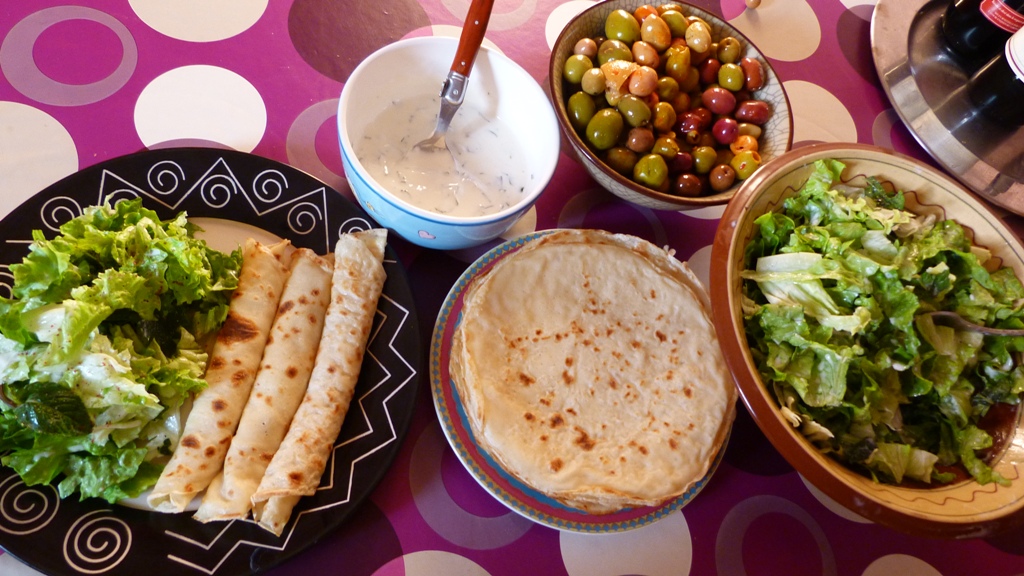
Food Mood: Crepes with Cheese and Herbs
To me crepes are the most versatile kind of food. They are easy to make, easy to fill, easy to please your guests with. Or your husband. When you don't feel like having meat or something sweet, and all you have in the fridge is cheese and vegetables, you can try your hand at this dish.
Monday, September 3, 2012
Food Mood: Crème Brûlée
Crème Brûlée is a custard-based dessert with a caramel topping. The base is usually vanilla-flavored, but it can also be fruity. This 400-year dessert is also known as burnt cream (referring to its caramelized finish), crema catalana (after its Catalan counterpart), or crème caramel.
Saturday, September 1, 2012
Food Mood: Cheese Fondue
Melted cheese dip - a great way to bring friends and family together around the same pot. A wonderful reason for a communal table with lots of red wine and golden toast. Yumminess.
Wednesday, August 29, 2012
Food Mood: French Onion Soup
Onion soup is a staple of the French cuisine. It is comfort food, very filling and tasty, packed with carbs and fat, but who cares? Just have a look at what it looks like and you'll see what I mean.
Monday, August 27, 2012
Food Mood: Moules-Frites / Mussels and Fries
Les moules frites was originally a Normand dish, but it spread all over France with the speed of light, as it is both deliciously simple, and simply delicious: moules frites = mussels with fries. Its popularity also stems from the tactile eating mode it triggers - you won't need only a glass of chilled white wine, but also lots and lots of paper tissues.
Saturday, August 25, 2012
Food Mood: Galettes
Galettes are large savory buckwheat flour pancakes that are mostly associated with Britanny and Normandy in France, where they sometimes even replace bread as daily food. One of the most popular varieties (La complète) is covered with grated Emmental cheese, a slice of ham and an egg, cooked on the galette. The lacy galettes are made in a very similar manner to sweet crêpes, but the difference is that buckwheat crêpes are cooked only one one side.
Friday, August 24, 2012
Food Mood: Quiche Lorraine
Quiche Lorraine, literally meaning Lorraine Cake, is a popular, rustic pastry dish filled with meat, vegetables, eggs, and lots of cheese. It is an open pie baked in a springform pan. With a buttery crust and a tender filling, it makes a popular option for basically all meals of the day.
Tuesday, August 21, 2012
Food Mood: Croque Monsieur vs. Croque Madame
If you visit Paris on a budget, the Croques are the most affordable food for you, except for the Turkish or Moroccan hole-in-the-walls. The average price is 6 euros. This basically very simple, popular food imbued with the French influence brought by the Bechamel sauce is a favorite among both locals and foreign tourists. But what's the difference between these two?
![]() |
| Croque Monsieur. (c) Premshree Pillai via Flickr. |
Sunday, May 27, 2012
Health Nut #2 - Greek Salad
Horiatiki salata is a perfect lunch treat in the summer. And it is indeed a summer dish in Greek cuisine. Not to mention it is a health booster and a staple in any kind of diet if you adjust accordingly the quantity of dressing.
Ingredients (for 2 large helpings):
- 1 small lettuce (this is not in the original recipe, but I like it)
- 1 cucumber
- 2 tomatoes
- 1 green bell pepper
- 1 medium-sized onion
- 150 gr feta cheese
- 20 pitted black olives
- 4 tablespoons dressing made of extra virgin olive oil, sea salt and lime juice
- freshly ground black pepper and extra for garnish
- (on the side) 2 slices of crusty bread or toast sprinkled with more olive oil and 3 cloves of garlic (minced)
1. The extra virgin olive oil is high in monounsaturated fats and Omega-3.
2. The vegetables are the best source of phytoestrogen, antioxidants, such as vitamin C, as well as lycopene (in tomatoes). Therefore, Greek salad translates into an excellent dish in anti-cancer diets or to prevent and fight cardiovascular diseases.
Saturday, May 5, 2012
Light Avocado and Sesame Salad: Pure Energy for All Day
Hi, this is Dana writing on my first actual post on Nomadosophy, so please be gentle and bear with one rookie's mistakes :)
So this morning I thought that it would be a good start if we ate something raw, healthy, nourishing and absolutely delicious! I will share with you a 10-minute recipe which I hope you will try as well.
All you need is:
- avocado
- tomatoes
- sesame seeds
- lime
- salt
- pepper
- a bit of chilli (if you like it hot)
Chop the avocado and tomatoes in small square pieces, squeeze the limes, mix all content with salt, pepper sesame seeds and chilli and that's it!
I guarantee you that the fresh flavor of lime will fill you up with energy and good vibes for the rest of the day! ;-)
Labels:
food,
health nut,
recipes,
salad,
vegetarian
Location:
Bucharest, Romania
Monday, April 23, 2012
Hearty Turkey and Potato Stew
Note: Potato stew with meat is a very common dish in Romania which is often associated with traditional food and, sometimes, well... poverty during Ceausescu's communist regime, as potatoes were something that all families had on their tables. However, I think we can say we are now experiencing a revival of this traditional dish which reminds us of the flavors of our childhood.
Ingredients:
- 2 spoons of vegetable cooking oil
- a large onion, peeled
- 500 gr of turkey (I used some turkey hearts which I cut in 4, but you can use any kind of meat you crave)
- 5 or 6 large potatoes
- 4 medium tomatoes
- several garlic cloves (to taste; I have to admit I am obsessed by garlic, so my dishes contain it in excess) (I am already drooling, again!)
- salt, pepper, and chili powder to taste
- parsley and one laurel leaf
How it's made:
Place meat in a large bowl. Sprinkle with 1 1/2 teaspoons salt and 1 teaspoon pepper; toss to coat. Heat 2 tablespoons vegetable oil over medium-high heat in a large soup pot. Add the meat and the onion and brown meat on all sides, adding a cup of boiled water when the meat juice is gone. Cook like this for 10-15 minutes.
When the meat is half-cooked and the water is reduced, add the onion to pot and sauté until almost softened, 4 to 5 minutes. Stir occasionally. When the onion is sauteed, add the potatoes (cut in small to medium pieces). Then cover all this with boiling water and add the laurel leaf. Reduce heat to medium and add half of the garlic as well.
Meanwhile, sink the tomatoes in hot water for one minute, then peel them and chop them (or grate them, in case you forgot to sharpen your knives!). When the potatoes are almost completely cooked (and you know how to do that: you check with a fork how soft they are!), add the tomatoes and simmer for 10 more minutes.
At the end, stir in chopped parsley, adjust chili powder, add the remaining garlic and serve. If you want to impress your guest with how you food looks and tastes like, you can add the parsley when you serve the food. This stew goes very well with polenta, pickles, and onion salad. Enjoy!
----------------------------------------------------
This is the first post in a series dedicated to Romanian food or to dishes that Romanians usually prepare in their homes for holidays or on any other day. The recipe below was made by my best buddy, Dana, who is a young, talented professional and a rugged cook. She loves Romanian food and cooks very often, even if she doesn't quite have time for that. Not to mention that she doesn't have time to write down the recipes and take pictures of her food. But she writes on this blog because she is very passionate about cooking and, well, she cares about me very much. :)
Monday, April 16, 2012
How to Dye Easter Eggs in Asia
| Easter Eggs dyed by my mother in Romania. |
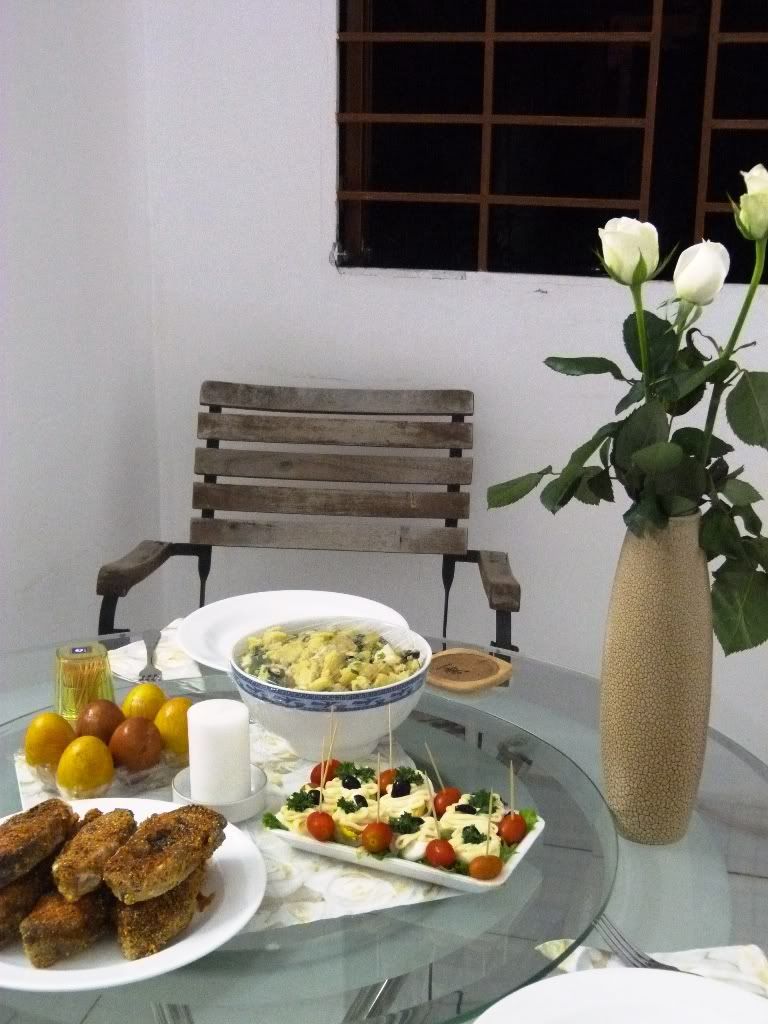
Christmas in Vietnam is a big event for everybody, but Easter, even if we live on an alley mainly populated by Catholics, has passed mostly unnoticed. Except for the church choir that we could hear more often during Passion Week, there was no egg painting, no egg hunt, no nothing. As we celebrated Orthodox Easter one week later than the Catholics, I had enough time to convince myself that we would not have any gorgeous dyed eggs on our table.
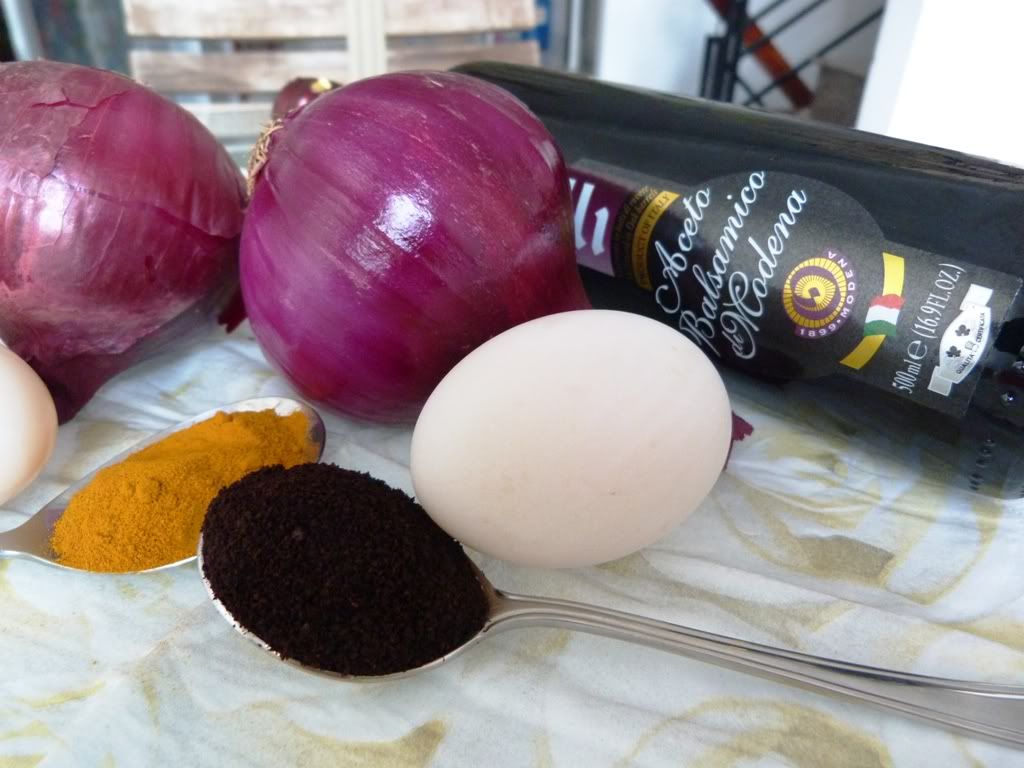
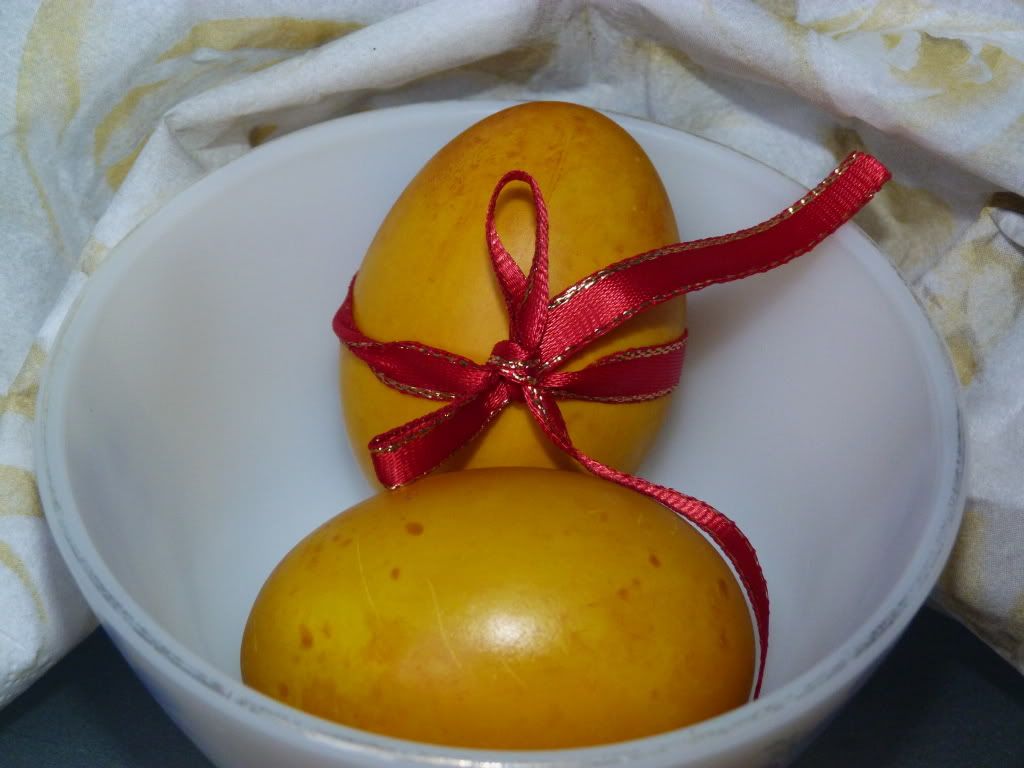
And this is how I found out coloring the eggs with natural, organic dye. Yay! So I tried my hand at that using turmeric (for yellow eggs) and red onion peels (for brown):
Ingredients:
turmeric (2 tablespoons) boiled in 500 ml water
red onion peels (from 3 large onions) boiled in 500 ml water
1 teaspoon of vinegar for each color
6 white eggs
1 teaspoon vegetable oil
Instructions:
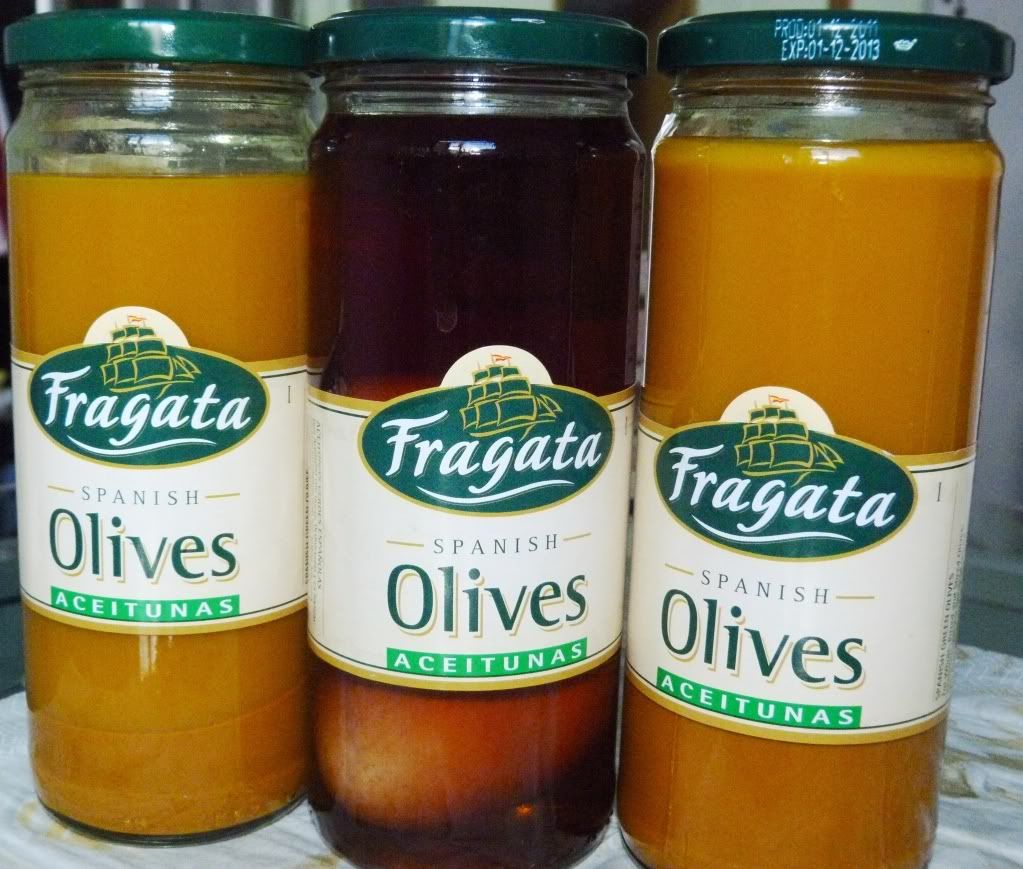
Boil the turmeric and the onion skins in two separate dishes. Before bringing the water to a boiling, add 1 teaspoon of vinegar and stir well. Then submerge the eggs in the water and let them boil for 9 minutes. After you remove them from the stove, check on the color of the eggs periodically and leave them in the solution until you get the color you want. I kept mine in glass jars for 5 hours, until they turned orange and medium-brown, to match the color range of my dinner setting.
Pretty simple! Once the eggs have dried, rub vegetable oil to bring a shine to them.
You can also boil the eggs separately and then put them in the coloring solution - the colors will be lighter. Here is what you can use in order to get naturally dyed Easter eggs:
Turmeric / Saffron - yellow
Onion peels / coffee - brown
Beets - red
Blueberries - blue
Green tea - green
Red cabbage - purple
Not so simple when you want to cook traditional Romanian Easter dishes, so I had to improvise and decided on:
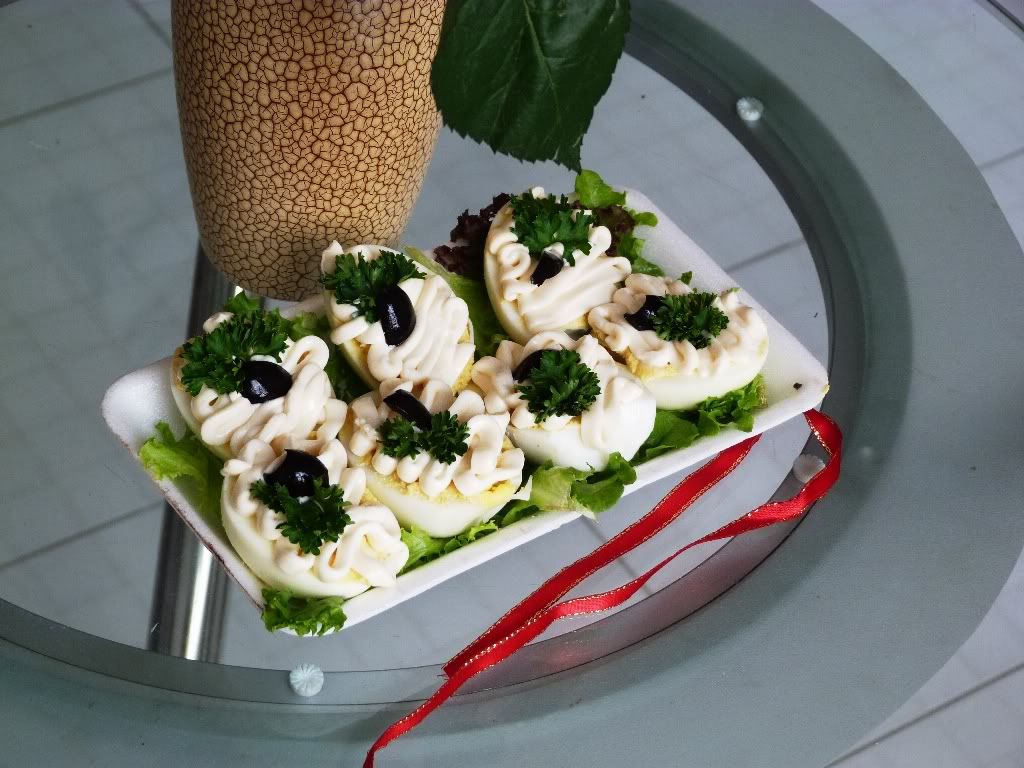
stuffed eggs
humus
toast with mozzarella
fried fish with garlic paste
oriental salad
Vietnamese sweet bread with coconut
Back at home, my family cooked "the real stuff":
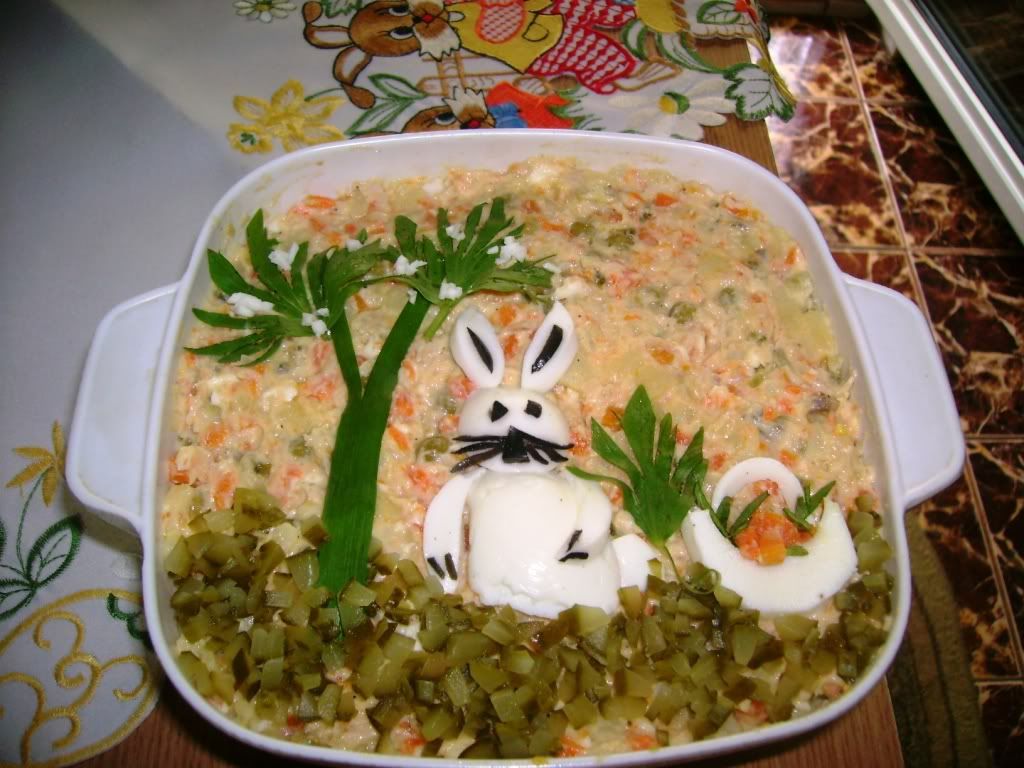
Boeuf salad (decorated accordingly as only my Mom can)
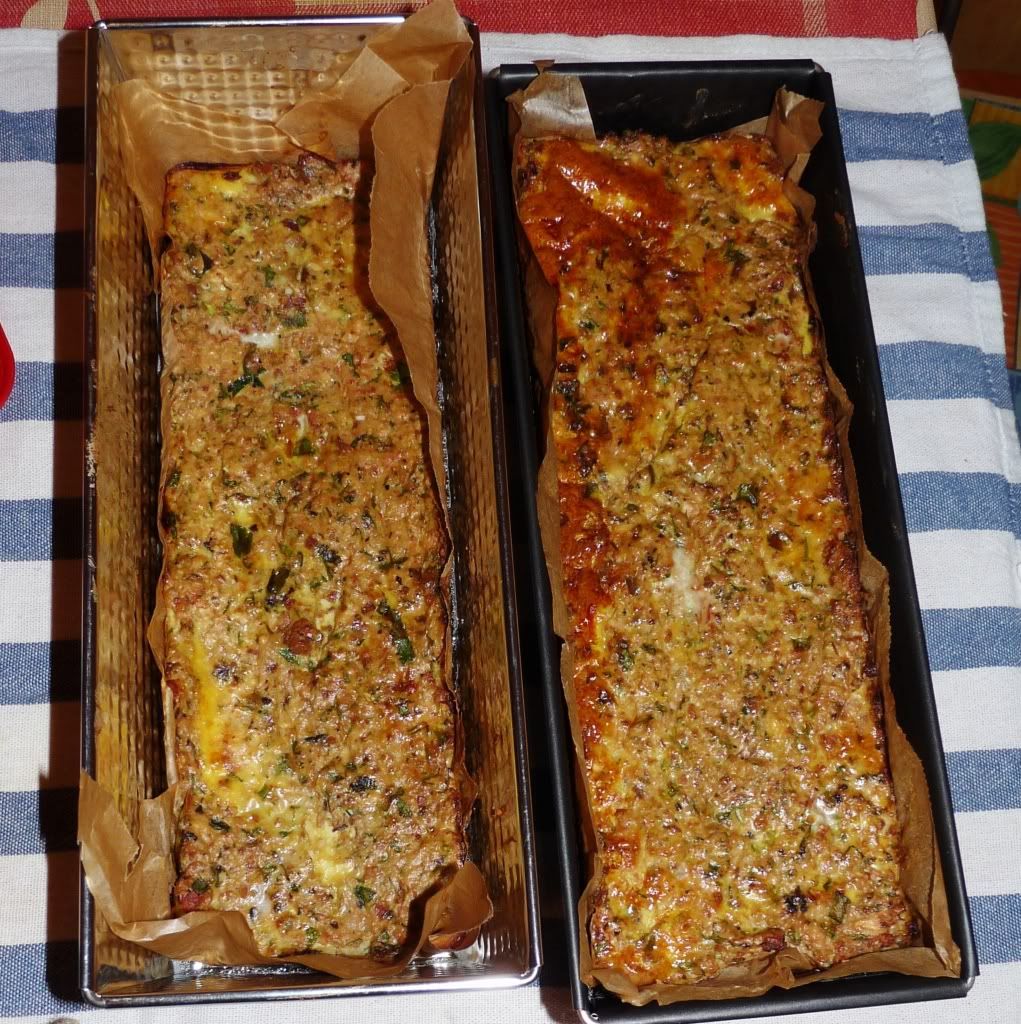
Drob (minced lamb or chicken with eggs and shallots)
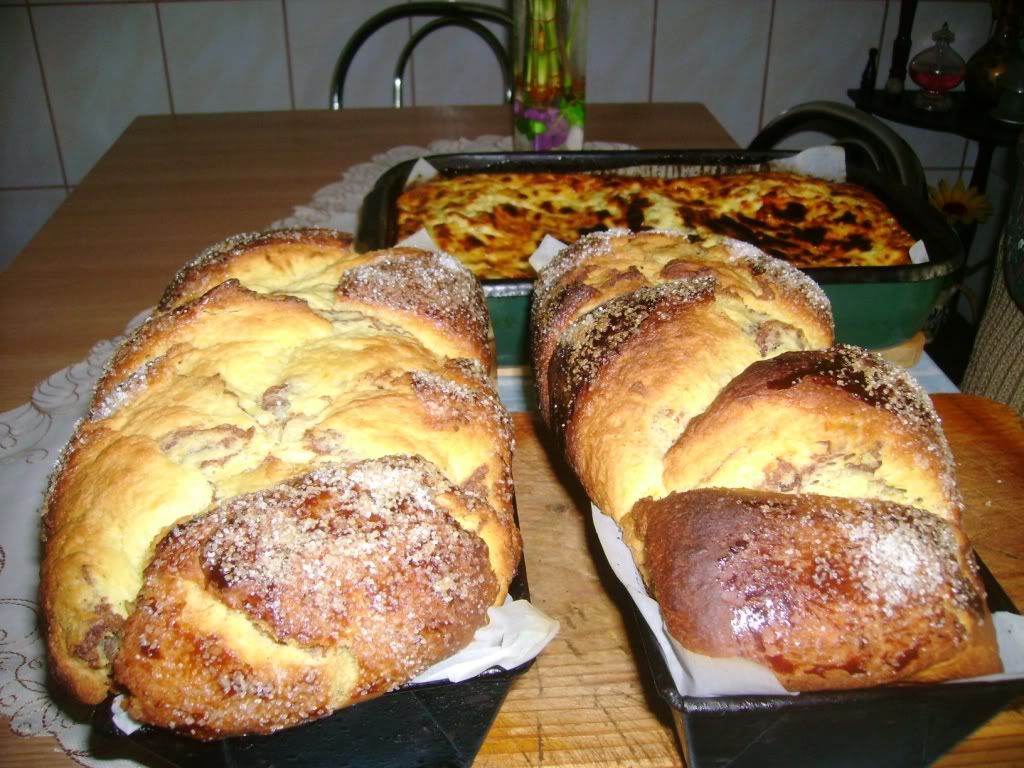
cozonac (sweet bread)
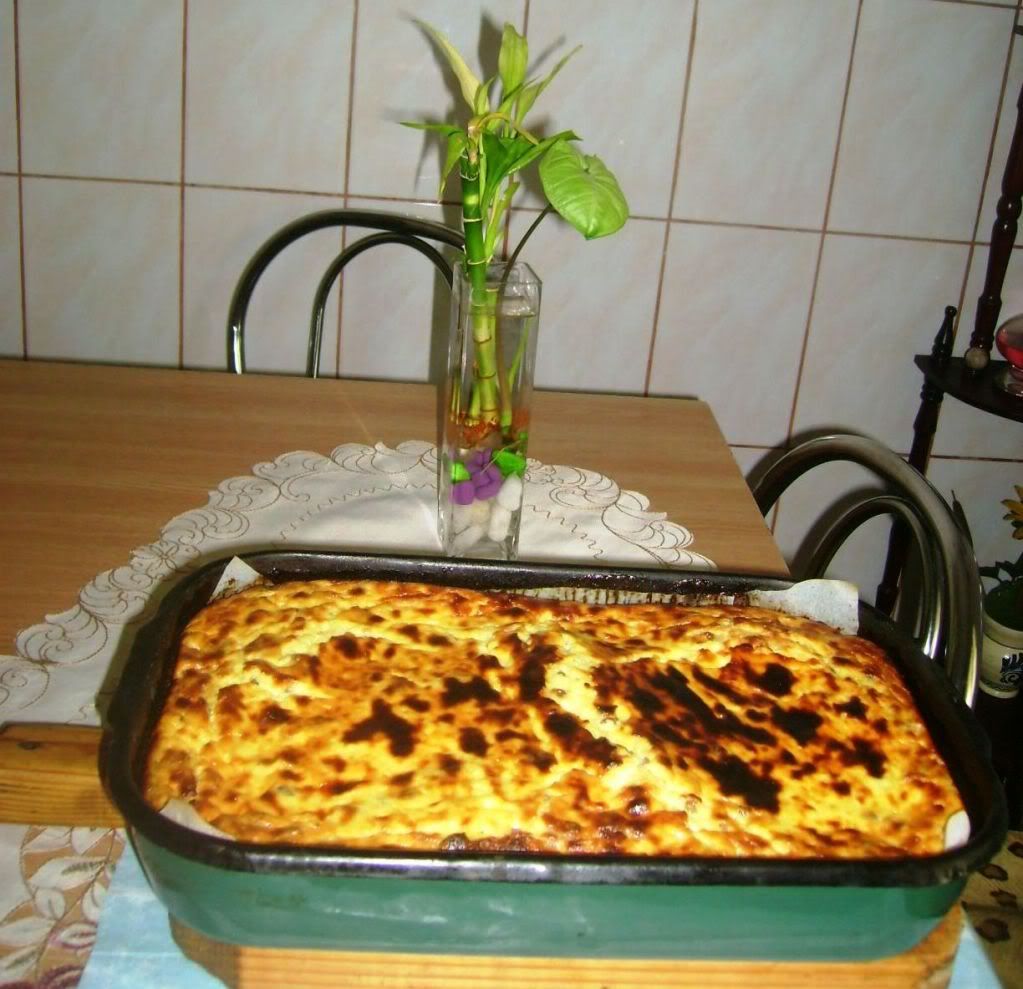
and Pasca (sweet bread stuffed with cheese and raisins)
Hristos a inviat! (Christ is risen!)
Thursday, November 10, 2011
Banh Xeo - Vietnamese Sizzling Crepes
Banh Xeo literally means sizzling crepes. They are savory and very thin crepes made of rice flour, turmeric powder, and coconut milk, and filled with pork, shrimp and veggies (such as bean sprouts or mung beans). The thinner and crispier they are, the better.
How to Prepare the Batter
- 2 cups of rice flour mixed with half a teaspoon of turmeric
- 1 1/2 cups of water
- 3/4 cup of coconut milk
- 1/2 cup of chopped scallions
- 1/2 ts salt
- 1 /4 lb pork (thin slices)
- black pepper
- 1/2 ts salt
- 1/2 ts sugar
- 1/2 ts fish sauce
- 1/4 lb of shrimp
- 1 medium yellow onion, thinly sliced
- 2 cups of bean sprouts
It Goes with: lettuce, mustard greens, mints, basil, perilla, fish sauce, pickled carrots and radish. To eat, just wrap it with a lettuce leaf and herbs.
How to Do It:
- Whisk together the rice flour, turmeric powder and salt. Add water and coconut milk and whisk until mixture is as smooth and fluid as yoghurt. Set batter to rest for 30 minutes.
- Heat up a 10-inch non-stick pan/skillet/light wok over high heat. Add 1 tablespoon vegetable oil and then add one portion of pork, shrimp, onions, scallions, and mushrooms. Stir fry until pork and shrimp are half done, and ladle 1/2 cup of batter into pan. Swirl pan to coat bottom evenly. Add bean sprouts over half the crepe (on the right). Drizzle another 1 tablespoon of lard/oil around outer edge of crepe and lower heat to medium.
- Cover pan and cook for 1 minute. Remove cover and continue to cook until edges begin to brown. Loosen crepe from bottom of pan with a soft spatula. When bottom turns light brown and crispy, fold crepe over bean sprouts.
How to Eat It: Wrap pieces of banx xeo in a lettuce leaf , together with leaves of mint, basil, or any other Vietnamese herb, dip it in fish sauce, and gulp!
Wednesday, August 3, 2011
Che Ba Mau (3 Bean Dessert)
I manage to order a glass of Che Ba Mau only recently, after almost 4 weeks in Vietnam. I don't know why, but the mushy/spongy looking drink didn't appeal to me at all. I knew it was a traditional Vietnamese 3-bean dessert drink, yet I refused to try it. The kind they serve at Quan An Ngon really made me crave one and I was not sorry at all.
Che Ba Mau (or the Rainbow Drink) is typically made of three types of beans - mung, azuki, and tapioca, coconut milk, jelly, and sugar. It is served with crushed ice and costs around 22,000 VND at any restaurant or 5,000 VND at the market. It is a fabulous drink, but probably not all the vendors have the right recipe. It happened to me to buy some tasteless che from the market - I really suspect it was made with soy instead of coconut milk.
Che Ba Mau Recipe (from www.asiarecipe.com)
3/4 cup skinless split mung beans, soaked for 3 hours and drained, 3/4 cup sugar, 1/2 cup red azuki beans, soaked for 4 hours and drained, 1-1/2 cups coconut milk, 1/4 cup tapioca pearls, 1 can longan, drained.
Directions:
1. Bring 2 cups water to a simmer in a pot over medium heat. Add the mung beans and 1/4 cup sugar. Cook, stirring constantly, until the water is completely absorbed, about 20 minutes. Remove from the heat and allow to cool. Refrigerate until ready to use.
2. Bring 2 cups of water just to a boil in a pot over medium heat. Reduce the heat to low, add the azuki beans and 1/4 cup sugar. Cover and simmer until the beans are cooked through, about 3 hours. Remove from the heat and allow to cool. Refrigerate until ready to use.
3. Meanwhile, bring the coconut milk and 1-1/2 cups water to a boil. Reduce the heat to low, add the remaining sugar and tapioca pearls, and simmer until the tapioca pearls have become completely transparent. Remove from the heat and allow to cool. Refrigerate until ready to use.
4. In an ice cream soda glass, working in layers, place 2 tablespoons shaved ice in between 3 tablespoons each of everything else starting with shaved ice, coconut tapioca, shaved ice (again), azuki beans, shaved ice (again), coconut tapioca (again), and a few longans and jelly bites on top. Use ice cream spoons to eat and a straw to sip.
Sunday, July 17, 2011
My First Home-Made Spring Rolls (Gỏi Cuốn)
I went to the local market in Binh Thanh the other day and just couldn't help buying a stack of rice papers (50,000 VND per kilo).
Vietnamese spring rolls have been a long-time favorite and I was very curious to find out if I could cook that at home. I surfed the Internet for a traditional recipe, but it seemed to me there wasn't really one. There are so many versions and I bet all of them are good! So I just looked in the fridge and used whatever I found in there:
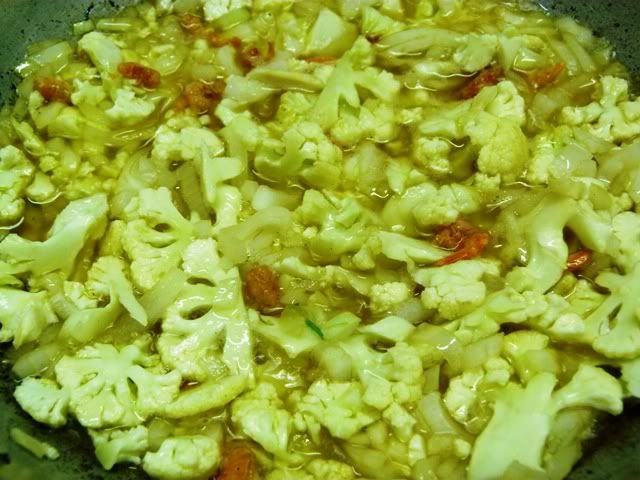
Chop the cauliflower and onion and stir fry them for two minutes. When these are almost done, add a few drops of fish sauce and some dried shrimp.
Then drain the oil and let everything cool down. Have the carrots and the pepper cut julienne and mixed with the other fried vegetables. This stuffing made of raw and cooked vegetables has a very interesting texture and is also really healthy.
The fun part is dealing with the rice wrappers. They are really fragile and have to be handled carefully, otherwise they may tear apart. Put some hot water in a pan and submerge each piece of rice paper for 10-15 seconds. The pan should be big enough to accommodate the rice paper. Dip only before making each roll and take it out when you see you can handle it easily.
Lay the wrapper on a flat surface. Begin with a small handful of lettuce or other green herbs you like in the bottom third of the piece of rice paper, then add two tablespoons of the stuffing on top, fold the sides in, then fold the bottom and roll it. Make sure you don't tug too tightly and place the roll seam side down. It looks like that:
We had them with lots of dipping soy sauce. Yes, I know we should have used Hoisin-chili sauce... but, hey! that was my first time! :)
Vietnamese spring rolls have been a long-time favorite and I was very curious to find out if I could cook that at home. I surfed the Internet for a traditional recipe, but it seemed to me there wasn't really one. There are so many versions and I bet all of them are good! So I just looked in the fridge and used whatever I found in there:
Chop the cauliflower and onion and stir fry them for two minutes. When these are almost done, add a few drops of fish sauce and some dried shrimp.
Then drain the oil and let everything cool down. Have the carrots and the pepper cut julienne and mixed with the other fried vegetables. This stuffing made of raw and cooked vegetables has a very interesting texture and is also really healthy.
The fun part is dealing with the rice wrappers. They are really fragile and have to be handled carefully, otherwise they may tear apart. Put some hot water in a pan and submerge each piece of rice paper for 10-15 seconds. The pan should be big enough to accommodate the rice paper. Dip only before making each roll and take it out when you see you can handle it easily.
Lay the wrapper on a flat surface. Begin with a small handful of lettuce or other green herbs you like in the bottom third of the piece of rice paper, then add two tablespoons of the stuffing on top, fold the sides in, then fold the bottom and roll it. Make sure you don't tug too tightly and place the roll seam side down. It looks like that:
We had them with lots of dipping soy sauce. Yes, I know we should have used Hoisin-chili sauce... but, hey! that was my first time! :)
Subscribe to:
Posts (Atom)