Showing posts with label Vietnamese cuisine. Show all posts

Wednesday, August 29, 2012

Vietnam Saga: Street Food, Rewarding Experience

To me and to many people I met in South-East Asia, Vietnamese cuisine is the best. It is, really. Not only is it super tasty, but also varied and spectacular. They cook almost everything on Earth and everything in their hands becomes delicious. Probably even rats, but I was not that curious.
  
Nha Trang Beach, Vietnam - Ladies selling grilled seafood.

Thursday, November 10, 2011

Banh Xeo - Vietnamese Sizzling Crepes


Banh Xeo literally means sizzling crepes. They are savory and very thin crepes made of rice flour, turmeric powder, and coconut milk, and filled with pork, shrimp and veggies (such as bean sprouts or mung beans). The thinner and crispier they are, the better.

How to Prepare the Batter
  • 2 cups of rice flour mixed with half a teaspoon of turmeric
  • 1 1/2  cups of water
  • 3/4 cup of coconut milk
  • 1/2 cup of chopped scallions
  • 1/2 ts salt
What to Put in the Filling:
  • 1 /4 lb pork (thin slices)
  • black pepper
  • 1/2 ts salt
  • 1/2 ts sugar
  • 1/2 ts fish sauce
  • 1/4 lb of shrimp
  • 1 medium yellow onion, thinly sliced
  • 2 cups of bean sprouts
It Goes with: lettuce, mustard greens, mints, basil, perilla, fish sauce, pickled carrots and radish. To eat, just wrap it with a lettuce leaf and herbs.

How to Do It:
  1. Whisk together the rice flour, turmeric powder and salt. Add water and coconut milk and whisk until mixture is as smooth and fluid as yoghurt.  Set batter to rest for 30 minutes.
  2. Heat up a 10-inch non-stick pan/skillet/light wok over high heat. Add 1 tablespoon vegetable oil and then add one portion of pork, shrimp, onions, scallions, and mushrooms. Stir fry until pork and shrimp are half done, and ladle 1/2 cup of batter into pan. Swirl pan to coat bottom evenly. Add bean sprouts over half the crepe (on the right). Drizzle another 1 tablespoon of lard/oil around outer edge of crepe and lower heat to medium.
  3. Cover pan and cook for 1 minute. Remove cover and continue to cook until edges begin to brown. Loosen crepe from bottom of pan with a soft spatula. When bottom turns light brown and crispy, fold crepe over bean sprouts.
How to Eat It: Wrap pieces of banx xeo in a  lettuce leaf , together with leaves of mint, basil, or any other Vietnamese herb, dip it in fish sauce, and gulp!

Wednesday, November 9, 2011

Ganh Hao Restaurant (Vung Tau)


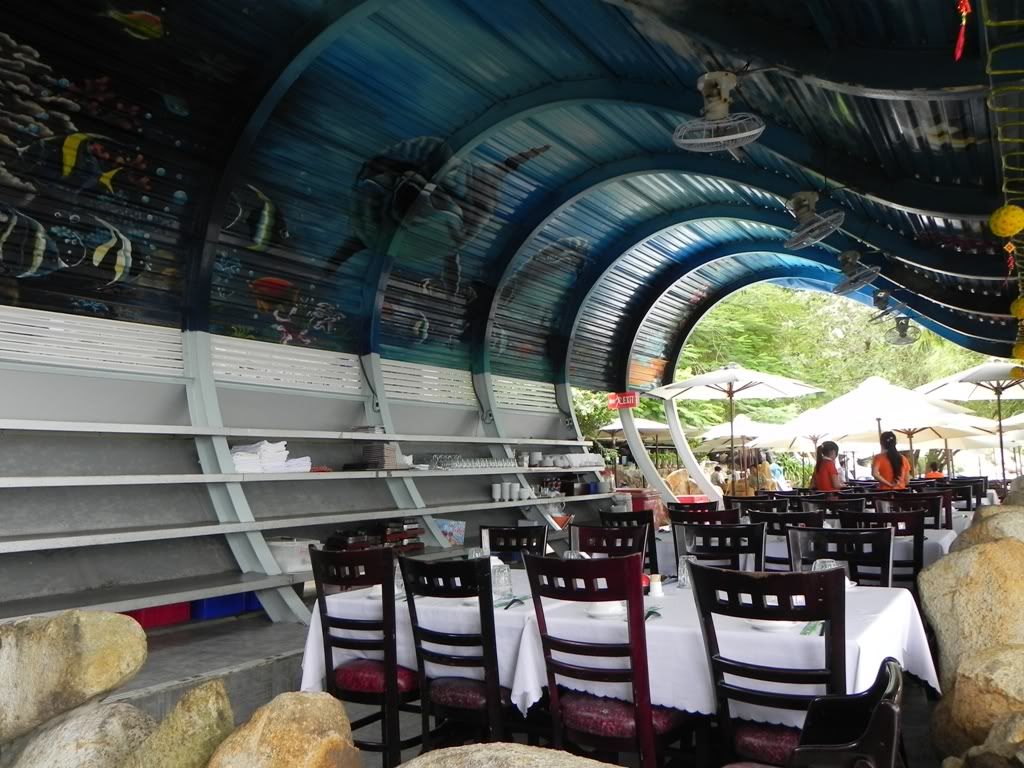
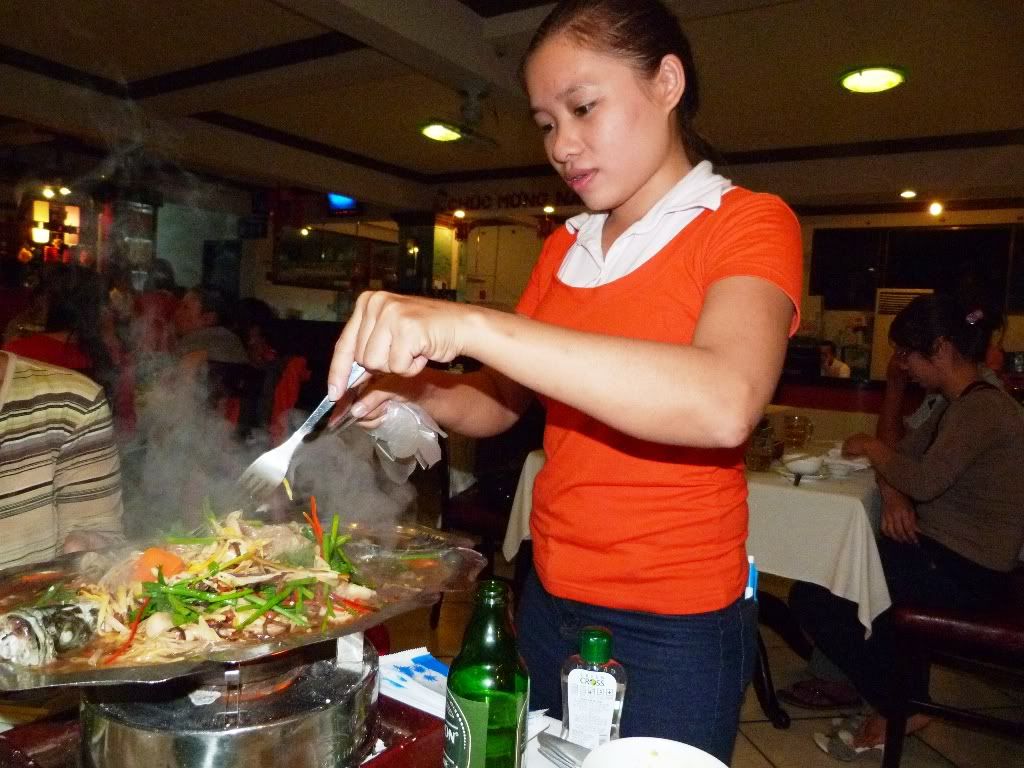
Being in Vung Tau for a couple of days over the weekend, we reserved our last night for a special treat: Ganh Hao restaurant. We had read its fabulous reviews on Tripadvisor and thought it would be worth a try.

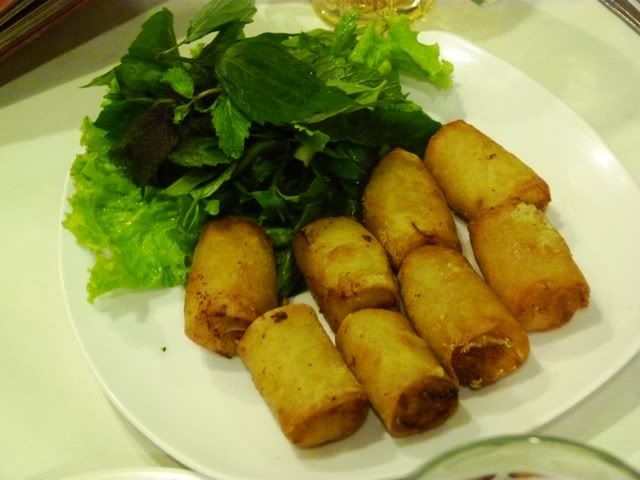
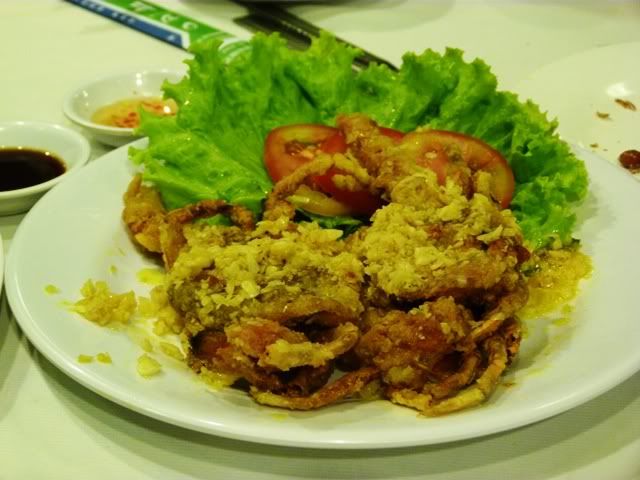
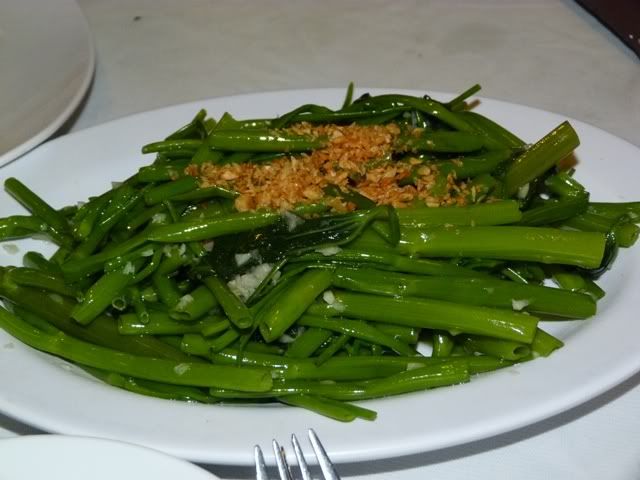
Ganh Hao is located at 3 Tran Phu St., right next to the water and locals say it's the best Vietnamese restaurant in town, serving the best seafood. It is true--the food is gorgeous:

Fried Spring Rolls
Fried soft-shell crab in butter with garlic
Fried spinach with garlic
Service is fast and never fails to impress: they help you deal with the food with your are a foreigner and don't know how to make a decent rice paper roll, they recommend the best and most affordable items on the menu, and are very fast.

Fish steamboat

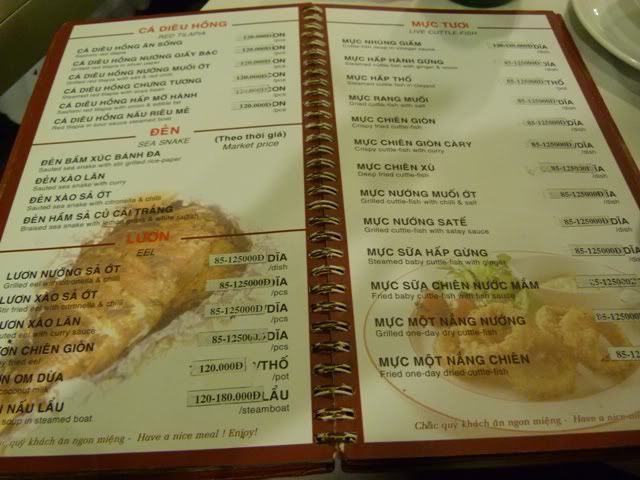
The menu is extended and well presented. Even if it is maybe pricier than other places in Vung Tau, it is still fairly reasonable. The bill for four people was around 900,000 VND ($45), with lots of Saigon beers included.


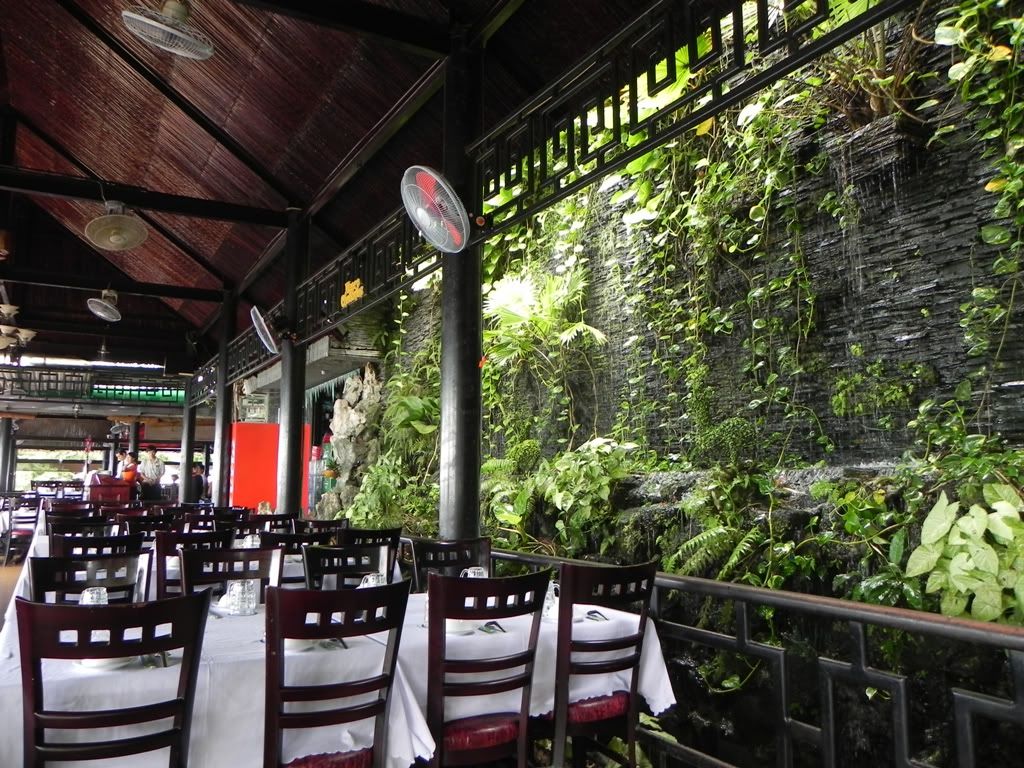
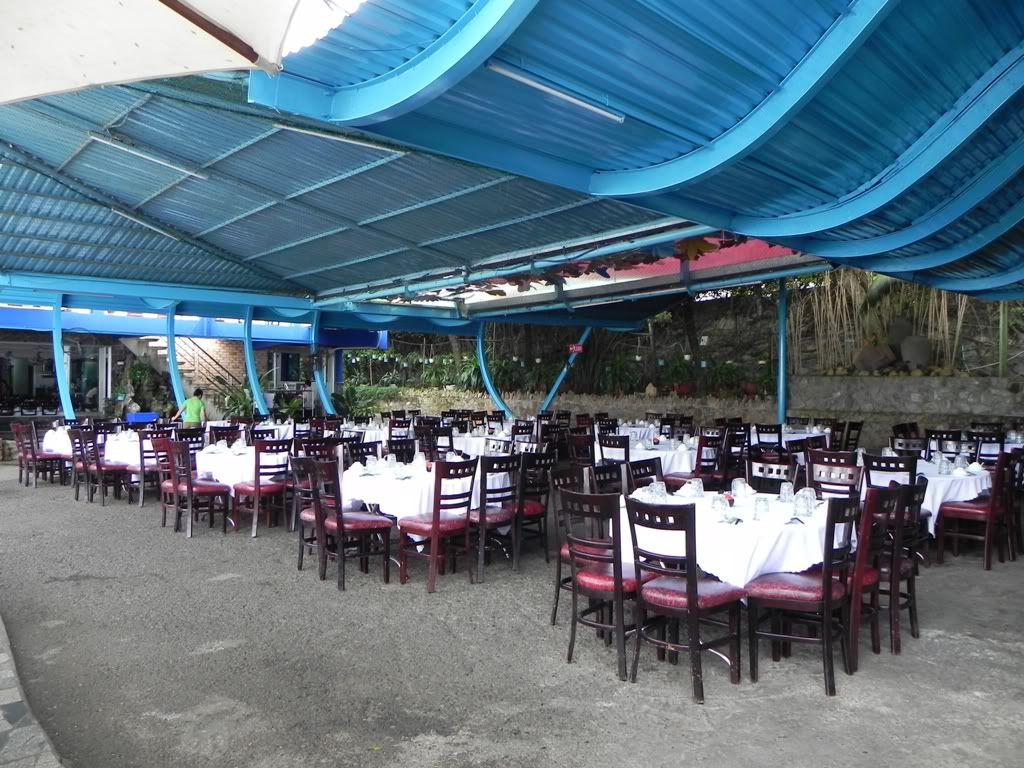
The place is huge and it can accommodate 200 people at the same time. Yet, it is always packed with tourists and locals. For this reason, it's not the best choice for a quiet dinner, but it is perfect for birthdays or parties with friends.Don't forget to make a reservation for dinners over the weekend.


Ganh Hao Restaurant - 3 Tran Phu St., P. 5, TP Vung Tau, Vung Tau; All major credit cards accepted. 

Ganh Hao

Tuesday, August 9, 2011

Vu Lau: Go Vegetarian on Mother's Day

Source: Flickr. (c) Herr_Bert.
(source: LookAtVietnam.com)

Vietnamese show their respect to mothers in the Vu Lan festival by wearing roses and going vegetarian.

The Vu Lan festival allegedly dates back to an Indian sutra which was translated into Chinese in the Third Century. The sutra told the story of a pair of Buddhist disciples who enlisted the help of Buddhist monks to save their mother’s soul. Legend has it that the woman had been reborn as a hungry spirit due to her evil deeds in life. The two believers gathered an assembly of monks to make offerings to her spirit and ease her suffering.

This story developed into the Vu Lan festival, which thrived in Vietnam, where people continue to believe that the spirits of the dead return home to feast on this day. Families all over Vietnam still put out offerings and burn incense for the dead. When the incense burns out (and the spirits have “feasted” on the offerings) children are allowed to eat the fruit and other food on the altars.

In the last hundred years or so, the holiday has also taken on a special meaning for living mothers, and the festival has now become something like a Vietnamese Mother’s Day. The Vu Lan festival falls on the seventh full moon of the lunar calendar. This year, in 2011, it will be held on August 14.

Buddhists and non-Buddhists wishing to express their gratitude and love toward their mothers pin roses to their clothing and head for the pagodas. People with living mothers wear red roses; those with deceased mothers wear white roses. The rose is a symbol of love and sharing among parents and their children, regardless of their social background.

Vegetarian cuisine plays an important role in commemorating the departed spirits. As a result, the town’s vegan restaurants (that typically see traffic only during the end and middle of the lunar month, when Buddhists avoid meat) are pulling out all the signs.

By Nguyet Anh, Thanh Nien News (The whole article can be found in the August 5th issue of their print edition, Thanh Nien Weekly).

Wednesday, August 3, 2011

Che Ba Mau (3 Bean Dessert)


I manage to order a glass of Che Ba Mau only recently, after almost 4 weeks in Vietnam. I don't know why, but the mushy/spongy looking drink didn't appeal to me at all. I knew it was a traditional Vietnamese 3-bean dessert drink, yet I refused to try it. The kind they serve at Quan An Ngon really made me crave one and I was not sorry at all.

Che Ba Mau (or the Rainbow Drink) is typically made of three types of beans - mung, azuki, and tapioca, coconut milk, jelly, and sugar. It is served with crushed ice and costs around 22,000 VND at any restaurant or 5,000 VND at the market. It is a fabulous drink, but probably not all the vendors have the right recipe. It happened to me to buy some tasteless che from the market - I really suspect it was made with soy instead of coconut milk.

Che Ba Mau Recipe (from www.asiarecipe.com)

3/4 cup skinless split mung beans, soaked for 3 hours and drained, 3/4 cup sugar, 1/2 cup red azuki beans, soaked for 4 hours and drained, 1-1/2 cups coconut milk, 1/4 cup tapioca pearls, 1 can longan, drained.

Directions:

1. Bring 2 cups water to a simmer in a pot over medium heat. Add the mung beans and 1/4 cup sugar. Cook, stirring constantly, until the water is completely absorbed, about 20 minutes. Remove from the heat and allow to cool. Refrigerate until ready to use.

2. Bring 2 cups of water just to a boil in a pot over medium heat. Reduce the heat to low, add the azuki beans and 1/4 cup sugar. Cover and simmer until the beans are cooked through, about 3 hours. Remove from the heat and allow to cool. Refrigerate until ready to use.

3. Meanwhile, bring the coconut milk and 1-1/2 cups water to a boil. Reduce the heat to low, add the remaining sugar and tapioca pearls, and simmer until the tapioca pearls have become completely transparent. Remove from the heat and allow to cool. Refrigerate until ready to use.

4. In an ice cream soda glass, working in layers, place 2 tablespoons shaved ice in between 3 tablespoons each of everything else starting with shaved ice, coconut tapioca, shaved ice (again), azuki beans, shaved ice (again), coconut tapioca (again), and a few longans and jelly bites on top. Use ice cream spoons to eat and a straw to sip.

Sunday, July 17, 2011

My First Home-Made Spring Rolls (Gỏi Cuốn)

I went to the local market in Binh Thanh the other day and just couldn't help buying a stack of rice papers (50,000 VND per kilo).


Vietnamese spring rolls have been a long-time favorite and I was very curious to find out if I could cook that at home. I surfed the Internet for a traditional recipe, but it seemed to me there wasn't really one. There are so many versions and I bet all of them are good! So I just looked in the fridge and used whatever I found in there:


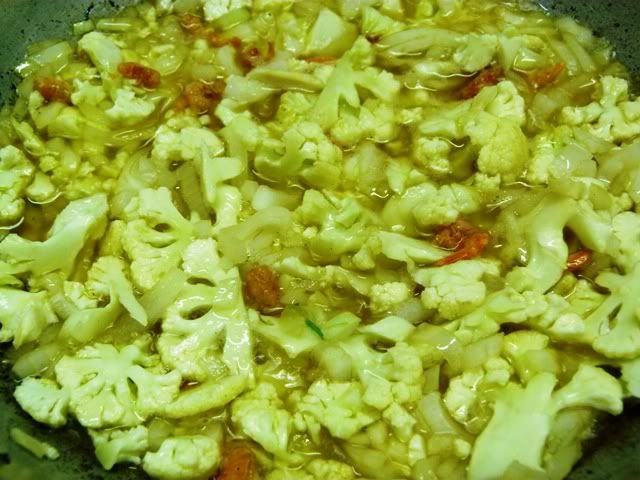
Chop the cauliflower and onion and stir fry them for two minutes. When these are almost done, add a few drops of fish sauce and some dried shrimp.


Then drain the oil and let everything cool down. Have the carrots and the pepper cut julienne and mixed with the other fried vegetables. This stuffing made of raw and cooked vegetables has a very interesting texture and is also really healthy.


The fun part is dealing with the rice wrappers. They are really fragile and have to be handled carefully, otherwise they may tear apart. Put some hot water in a pan and submerge each piece of rice paper for 10-15 seconds. The pan should be big enough to accommodate the rice paper. Dip only before making each roll and take it out when you see you can handle it easily.


Lay the wrapper on a flat surface. Begin with a small handful of lettuce or other green herbs you like in the bottom third of the piece of rice paper, then add two tablespoons of the stuffing on top, fold the sides in, then fold the bottom and roll it. Make sure you don't tug too tightly and place the roll seam side down. It looks like that:


We had them with lots of dipping soy sauce. Yes, I know we should have used Hoisin-chili sauce... but, hey! that was my first time! :)

Friday, July 1, 2011

My (Phở)-rst Morning in Saigon

I literally could not open my eyes this morning. It's our first morning in Saigon. We are so damn tired after an almost 24-hour journey from Romania to Turkey and then Vietnam. But it is so all worth it!

My first full day in Saigon started brilliantly. Chris went downstairs to bring me some coffee and came back with a huge tray with phở (yeah!), omelet, fluffy baguette, bananas, and coffee. Phở is mind blowing: so many flavors - garlic, ginger, lemongrass, cilantro, shallots; I think this is going to be my addiction here.

If this means breakfast, I am very curious what dinner is all about. Only 10 hours to go :D.

[caption id="attachment_1227" align="aligncenter" width="640" caption="My craving for the past 6 months."][/caption]


[caption id="attachment_1229" align="aligncenter" width="640" caption="View from our room - De Tham St."][/caption]

Tuesday, June 14, 2011

Fish Sauce Reigns Supreme

[caption id="attachment_1012" align="aligncenter" width="640" caption="Nuoc cham. Source: Flickr. (c)www.worththewisk.com"][/caption]

From deep fried, salad, or steamed food to noodles, fish sauce dip is often used as an inspired accompaniment. You are sure to use nước chàm (nước mắm) very often while in Vietnam – it’s like salt for the Europeans or Americans, it basically goes with anything.

This essential ingredient for the Vietnamese cuisine is in fact a condiment made of fish that has fermented. It can be either used during the cooking process or as a dip for pork, shrimp, chicken or fish. Nước chàm means fish sauce dip, while nước mắm means raw fish sauce that is used for cooking.
Some fish sauces (extracts) are made from raw fish, others from dried fish; some from only a single species, others from whatever is dredged up in the net, including some shellfish; some from whole fish, others from only the blood or viscera. Some fish sauces contain only fish and salt, others add a variety of herbs and spices. Fish sauce that has been only briefly fermented has a pronounced fishy taste, while extended fermentation reduces this and gives the product a nuttier, cheesier flavor. (source: Wikipedia)


[caption id="attachment_1013" align="aligncenter" width="640" caption="Nuoc mam. Source: Flickr. (c) Eva Funderburgh."][/caption]

The most appreciated variety of fish sauce used in the Vietnamese cuisine is said to come from Phu Quoc and is made of anchovies, herring, or sardines. Fish scraps are placed in earthen jars, layered with salt, and weighted to draw out the moisture from the fish. When the liquid has dripped off the fermented fish, it is collected from the bottom of the barrels in which it is made, then poured back into the top of the barrel. The fermentation process may take as long as 6 months. At the end, solid parts are strained out.

[caption id="attachment_1014" align="aligncenter" width="640" caption="Making fish sauce. Source: Flickr. (c) poida.smith"][/caption]

You may think its fragrant odor would spoil everything, but it seems the fish smell disappears when combined with other ingredients. Well, I think the same about garlic in my kitchen :).

Tips:

1. When you buy fish sauce, check the label first - the nhi signifies a high quality sauce (it is from the first extraction, much like extra-virgin olive oil).

2. There is also a non-liquid version of fish paste, called mam ruoc.

3. Look for the light amber colored fish sauce.

4. Fish sauce can be kept at room temperature.

[caption id="attachment_1015" align="aligncenter" width="640" caption="Fish sauce barrels. Source: Flickr. (c) s tsui."][/caption]

Sunday, June 12, 2011

Fabulous Foods: Salangane Nests

[caption id="attachment_947" align="aligncenter" width="500" caption="Salangane nest"][/caption]

Source: VietNamNet/VietNam News


After an hour by boat from Nha Trang city, the Noi and Ngoai islands, home to thousands of salanganes, appear on the horizon. Although accessing the islands used to be forbidden in order to protect the environment and the salangane nests, tourists can now discover the magical world of the salangane between February and September yearly.

Apart from its salanganes, the islands boast pristine beaches, a pure atmosphere and a strange kingdom where humans are but guests and birds their hosts. While Ngoai Island can only be seen from by boat, visitors are allowed to walk around Noi Island. Tourists are allowed to visit the rock cliff caves where the salanganes create their nests while enjoying delicious and nutritious food which, in the past, was reserved for only kings or as rewards to their courtiers and distinguished guests.

Salangane nests (yen sao in Vietnamese) are extremely expensive and legendary products collected and consumed for thousands of years. Its demand and economic value has only increased as time has gone by. Chemical analyses have shown that salangane nests contain special nutritious components including protein, glucid, sialic acid and microelements. Eating salangane nests thus has the effect of filling you up, fostering strength and health recovery.

Amongst many regions along Viet Nam’s long coastline, Khanh Hoa Province plays home to an abundance of salangane nests, according to Le Huu Hoang, director of the Yen Sao Khanh Hoa Company. It has been estimated that over 12 rock islands, especially Noi and Ngoai islands off the Khanh Hoa Province coast, hosts more than 200,000 salangane birds during breeding season.

"While Ngoai Island housed the most salanganes, Noi Island is famous for the high quality of its salangane nests", said Hoang. Tour guide Vo Van Cam, also a salangane nest collector, took us to the island’s goddess temple upon our arrival.

It is said that the island’s Governor, Le Thi Huyen Tram (1753-93), a female officer in the Tay Son Navy during the 18th century, sacrificed her life to protect the salangane islands and the Khanh Hoa sea territory. A 5.5m tall Goddess statue was built in honour of the valiant Governor, locals still believing that she protected the land, the sea, the salanganes and the nest collectors. Before setting foot on the island, collectors visit the temple, burn incense and pray for protection, seeing as collecting salangane nests is often fraught with peril. A festival, dedicated to the Governor, is held annually on the 10th day of the fifth lunar month, consisting of a ritual worshipping ceremony and performances, which mainly attract salangane nest collectors from around the region.

Discovering the salangane caves, where collectors use bamboo stairs to get their hands on precious nests, is an unforgettable experience. Although most birds build their nests from straw and twigs, salangane nests are made from their saliva, stuck to high cliffs in rugged, inaccessible caves throughout the island. To access the nests, collectors are required to climb bamboo ladders. Because the caves have to remain dark, lest the birds are scared off, many climbers fall to their death annually whilst hunting nests.

“Tourists are always interested in my stories,” Cam said adding that, “apart from learning about salanganes and the beautiful sights, they also learn about our work and the dangers we have to face.”

Salangane nests are shaped like teacups split lengthways, the bottom of the nest is thickest and stuck to the cliff. There are various types of salangane nests, dependent on size and colour. Nowadays, tourists visiting Noi Island have the chance to enjoy salangane nest soup. The nests are usually placed in a porcelain pot, steamed with chicken, beef, young pigeon or lotus seeds. In the past, devotees often bathed first and dressed up in their best garb before partaking in a porcelain bowl of soup.

Salangane nest soup can be served as either an appetiser or following a dish. Because of the huge demand for nests (thought to have medicinal qualities), locals began collecting nests several times a year, causing the birds to have to produce new nests more often.

Noi Island has a beautiful twin-beach, one side towards the land and another towards the ocean. The white sand bank,  stretching out along pure blue water, is a wonderful place to get away from worries and stress.

By glass bottom boat, visitors can see fantastic coral reefs surrounded by colourful fish; enjoy swimming and snorkelling in clear, smooth water. Discovering the salangane islands can be a once in a lifetime experience for many and is well worth the trip.

[caption id="attachment_948" align="aligncenter" width="640" caption="Source: Flickr. (c) Lip Kee"][/caption]

Thursday, March 17, 2011

Mooncakes

Monncake with Lotus Filling


Mooncake is a traditional cake that is a must-have delicacy on the mid-autumn festival day for all families. In Vietnam, mooncakes are known as bánh trung thu (literally Mid-Autumn cake) and is adorned with an imprint that reads Nguyen Family. They have a very rich taste and are offered as gifts for and from family, friends, colleagues, and even business partners.

It is a stuffed pastry cooked only once a year. Imagine how eager the children are! In Vietnam, they are usually square. According to an old legend, the round shape symbolizes the sky and the square symbolizes the earth. Traditionally, the filling also includes a small yolk which represents the moon.


If  they are baked, the outer dough is a thin pastry, rolled flat and smoothed around a ball of filling, such as savory roasted chicken, pork, shark fin, mung beans, coconut, durian, sweet green bean, or a sweet mixture of lotus seeds, sliced lemon leaves, ground beans, and sometimes salted egg and pork fat for flavor. They can also be made of sticky rice, in which case they look like that:


Mooncakes are rich, heavy, and dense. The best way to have it is over a cup of lotus tea. A piece of traditional mooncake should cost about $1-$2.